





 By Hafiz
Translated by Sakhi Rezaie
The history of the Hazaras’ entry into the world of education is both a painful and glorious one. The systematic discrimination and exclusion of the Hazaras from education continued until the time of the Republic of Daud Khan. Only during the first period of the Republic (1973-1978) a few schools were built in some Hazara areas. Meanwhile, more schools were built in the Pashtun-dominated areas and southeastern Afghanistan, providing educational opportunities for Afghan and Pakistani Pashtuns. In 1962, when Nangarhar University was established in Jalalabad, it was interesting to note that the majority of its students were Pashtuns from outside the border (Pakistan) rather than Pashtuns from inside Afghanistan (Mousavi, 222-223), let alone Hazaras. During this period, the Pashtun elite had the opportunity to study in the West, and the middle class studied domestically (Mousavi, 223). This situation effectively consolidated the superiority of the Pashtuns in the absence of education for the Hazaras. The absence of education for the Hazaras was compensated only by education in traditional centers and religious and traditional content inside and outside the country, such as in Iran, Iraq, and Syria.
Abdul Khaliq Hazara is one of the students who studied at the Nejat High School in Kabul (Ghabbar, 220-221), and this is due to his relationship with the Charkhi family, which provided him with the opportunity to study (Farhang, Vol. 1: 404).” Farhang writes: “The truth is that Khodad Khan, Abdul Khaliq’s father, was among the courtiers of the Charkhi family, and Abdul Khaliq personally had been with the youth of that family since childhood, who were his age and schoolmates, and had friendships and camaraderie (Hamo, Vol. 2: 631).” Apparently, during the Hazara massacre, Abdul Khaliq’s father left the homeland and engaged in “joviality,” and eventually became a retainer of the Charkhi family. But his father, “Khudad, the elder brother of Mowladad, this oppressive peasant who had worked as a porter towards the end of his life, married a slave girl from the Charkhi family who was from the Hazaras of Uruzgan and, like thousands of Hazara girls, had been taken as a slave and taken captive in the invasion of the Hazaras’ lands. The first fruit of this marriage, who was born three years before the independence uprising, was Abdul Khaliq (Memorial of Martyr Abdul Khaliq, 29).
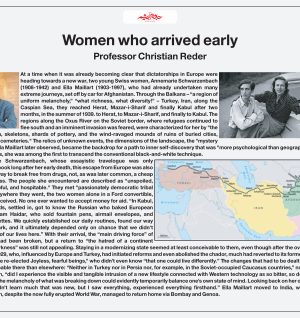
Another person who entered the school informally is Professor Ali Mohammad Zahma. Professor Christian Reeder writes about him: “Gifts from his grandmother to the school principal were enough for Zahma to be the only Hazara to be accepted into the government school (Ahmad Shah Abdali High School).” Where he became one of the best students in his class and then the entire school with his genius. There he learned English and then completed the basics of Arabic. Many of the teachers at the school were from British India or residents of Kabul. The fourteen-year-old students dealt with the works of Shakespeare. The lessons were of such quality that one of Zahma’s classmates later became a professor at Kabul University. Zahma himself was one of the top ten students of that school year and was selected and accepted by Naeem Khan to the famous Habibia High School in Kabul. During a trip to Kandahar, Naeem Khan, the brother of Daoud Khan, visited the Ahmad Shah Abdali School and met the outstanding students of that school, including Zahma. He gave him a cash payment equivalent to five months of a teacher’s salary so that he would not be deterred from traveling to Kabul. Zahma went to Kabul and pursued his studies at the Habibia High School with great seriousness. Based on his academic qualifications, Zahma was able to receive a government scholarship and, therefore, continued his studies at the famous University of Oriental and African Studies in London from 1954 to 1958; a university whose prominent graduates include the Middle East expert Bernard Lewis and the head of the Myanmar government, Ms. Aung San Suu Kyi (Reeder, 2023: 49-53).
In short, education and learning in the Hazara community has always been a story of ups and downs. The last two decades, which are also called the golden age of education and cultural prosperity for the Hazaras, are in contrast to the decades of prohibition. But this period has also been very difficult and mixed with blood and gunpowder for Hazara students.
Although the number of Hazaras writing and storytelling has increased in recent years, there have been fewer personal accounts of their difficult educational journeys. There are some that are about their educational journeys, but most of them deal with general issues. The specific and case-based accounts of a Hazara student’s educational journey remind me of the film “Back to 1942.” This film is about the years of war and famine in China. A famine occurs in one of provinces of China with 30 million population, and at the same time, the Sino-Japanese war begins.
The people of Hanan Province are migrating. The journey is so difficult that all the people’s grain runs out and even the milk in the mothers’ breasts dries up due to hunger. Sometimes just one meal is the price of many travelers’ lives. This path is so arduous and this journey is so difficult that sometimes people decide to go to war and be killed or to starve and die just for one meal. Along the way, those who are weaker die earlier than others. But gradually the turn of the stronger ones also comes.
Although the beginning of this film is sad, its ending is moving. After all the hardships, difficulties, and losses along the way, in the end, among all the people who had migrated from Hainan in the hope of salvation and a new life, only a little girl and an old man remain. These two, one weaker and more needy than the other, although they do not know each other at all, join hands for salvation in a cold desert with a harsh and an endless path, and one of them walks with difficulty with the help of a cane and the little girl with the help of the old man. No one from their tribe or family has survived either.
For someone who knows the past of the two, that is, knows where they came from, who they lost, how much they suffered, they can also guess the future of their walk in the cold and empty desert. After all that journey, in the end, an old man who walks with difficulty with the help of a cane, in a cold, slightly snowy and deserted desert, takes the hand of an eight-year-old girl and gives her hope for better days. This comfort in the heart of such a situation, after a miserable and difficult past, from those two people, each more helpless than the other, is much sadder than dying and despairing and feeling like dying and giving up.
The story of studying in Hazarajat ,Central Highlands of Afghanistan, sometimes resembles the hardship of “going back to 1942.” Just two decades ago, students who flocked to the university from all over the country faced many hardships. The roads in Hazarajat were cold and snowy, and there were no cars. Students would travel through the snow and on foot, carrying backpacks of bread, clothes, and books, with empty pockets but strong hope. On cold days, they would sometimes spend half the day in the snow, and at night they would sleep in cold mosques without tea or bread. Now that we see those days from a distance, some of those students, just like in the final scene of the film “Going Back to 1942,” lived only on hope. An incomparable hope kept pulling them towards the university, hoping that one day those days would pass and they would begin a better season. Because hope is glorious in the midst of difficulties.
But for some of those students, those hopes were even sadder. Like the old man and the little girl at the end of the film, they were the ones who did not give up, not knowing that this cold and desolate desert was not the way to save the old father and the helpless little girl. They did not know that after crossing the difficult and snowy roads, after enduring the cold and hunger, they would eventually be forced to commit suicide on the university’s second floor and be torn to pieces right in front of the classroom. This difficult beginning had a bitter end.
Attacks and suicides
The work did not end with the hardships of the journey and discrimination at the university. It is true that discrimination, humiliation, slander, and ridicule were sometimes obvious, but this was not the end of the story. A much bloodier and more violent chapter was on the way: attacks and suicides. While on the one hand, the secret story of exclusion and discrimination was going on, on the other hand, open and public attacks and assaults on Hazara schools also began.
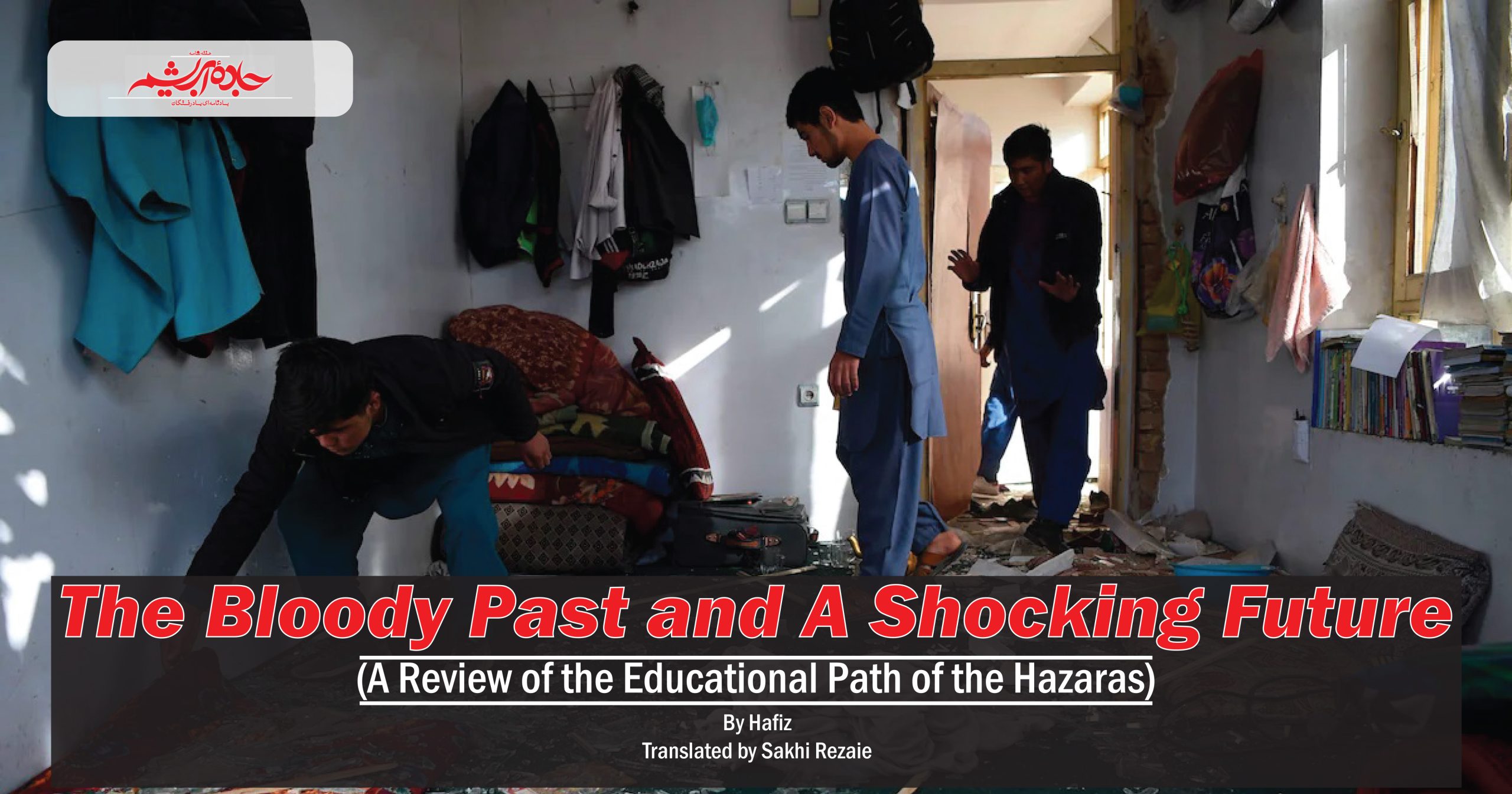
From the republican era to the Emirate, Hazara educational centers, including in Dasht-e-Barchi, west of Kabul, were repeatedly targeted by suicide and explosive attacks. Sometimes the attackers would enter the classroom and shoot any student who was close enough to be sure that their bullets would not miss. After shooting and causing panic, they would pretend to be suicide bombers. Sometimes the attackers would just ambush the girls on their way to school and attack them as they were leaving school. Sometimes a Pashto-speaking classmate would sit at the back desk of the classroom and blow up the Hazara children’s classroom. Sometimes they would place explosives on the way to Hazara students and detonate a bomb during rush hour.
These explosions and suicides were not attacks that happened suddenly and unexpectedly every few years. In the educational centers of Dasht-e Barchi, sometimes two explosions in one day would tear the bodies of students to pieces. People who had come from those difficult and risky paths to study and gain knowledge were torn to pieces in the classroom.
After those difficult years and the change of government; but for the people who still went to class despite the high probability of suicide attacks and did not back down despite the constant shadow of death, the situation of educational centers did not improve. With the Taliban rule, not only were these wounds not healed, nor were facilities provided; but educational centers were once again under the Taliban’s onslaught and clamor of Propagation for Virtue and Prevention of Vice.
Not only did the Taliban not improve the situation, but from the very first days of their rule, they directly attacked educational centers and at various points, after placing curtains in the middle of classrooms or separating girls’ and boys’ classes due to gender segregation, they banned girls from education and closed many educational centers completely.
From Books to Bread
The Taliban’s attack on Hazara schools was not just an attack on the knowledge and awareness of the people, it was also a robbery of their bread and table.
Many people consider the 1980s and 1990s to be the golden years of Hazara education. According to the general belief, during these twenty years, if no other opportunity was available to Hazara people, at least Hazaras studied. Hazara people went to university, opened educational centers, received scholarships abroad, and most importantly, compared to many other ethnic groups in the country, Hazara women and girls turned to education more than them.
Two decades ago, educational opportunities for Hazaras were much more difficult. Not so long ago, Hazaras were bought and sold as slaves and were denied the right to an education. Even after those years, conditions for Hazaras were such that many of them were unable to study.
The vast majority of those born between the thirties and sixties were not educated. Even twenty years ago, in many Hazara villages, there were few people who could read a letter from a traveler who had been missing for years. But in the eighties and nineties, unlike previous generations, there were very few people among the younger generation of Hazaras who could not read a letter.
From this, many people have concluded that these two decades were the golden years of education for the Hazara people. In villages where a decade ago, there were few people who could read a letter, now there are few who cannot.
Given the history of deprivation for the Hazaras, these two decades were a brilliant period in terms of education. After decades of being rejected and ignored, this time, educated Hazara boys and girls sat at many exam tables more proudly and confidently than others. If it were not for discrimination and political interference, Hazara boys and girls would be much more confident than their peers in becoming employers, professors, and top-ranked.
These slum dwellers, who have been discriminated against for years, if there was transparency, could now enter high-paying jobs. Earn a good salary, have a good job, and for the first time in Afghanistan’s history full of discrimination, free themselves from the burden of hard work. In general, photographs and visual documents that have been available for a long time, it can be seen that the Hazaras have aged much earlier than their years. Even Hazara teenagers are seen with wrinkled faces, with very shy and awkward movements, and with their gazes bent to the ground. The Hazaras are still less humorous and constantly worried. All of this goes back to years of oppression, suppression and hunger. Years when not a single person from a family, from a village, from a region, from a district, from a province, and even from a tribe could find a worthy and respected job.
Given this horrific past, the classes full of students in schools were considered a multi-fold growth. Work was considered, honor and dignity, and value were considered, there was hope, there was the future, there was freshness, there was prosperity, there was competition, there was eye-to-eye contact, there was equality, and there was even a feeling of superiority. A small family with elderly parents who never grew up due to political oppression, who did not do well at work, who did not even sleep for a week with full pockets and without worrying about their dinner, now when they saw their children in the first row of competitive grades, they had the right to feel that they had bread and status. These hopes were entirely lived experience. They did not need any research, discovery or theory. These people had seen that illiteracy is suffering, illiteracy is ignorance, deprivation, self-deprecation and lack of self-confidence. They had seen that illiteracy was a lack of politics. But in parallel with the lived experience of these people, there were many theories and studies in other parts of the world, and there are now more, that illiteracy is poverty.
Many theorists and thinkers believe that poverty cannot be eradicated without awareness. In the view of many of them, for a more reliable escape from poverty, there is no need to distribute money, but to reduce the cost and make education and training more general. So far, to my knowledge, the latest theorists who have researched the field of escape from poverty are of the opinion that we have only one way to save the poorest regions of the world: to make education free and general. In their view, if we can establish libraries, schools, universities, and research and educational centers in poor regions, it will not be long before the people of those regions will develop in various ways.
To increase political oppression and suppression of the Hazaras, however, the discriminatory political rulers of Afghanistan raided the libraries and educational centers of the Hazara people one by one. In addition to the fact that many courses were funded from this source and the professors had chosen this path, the growth of the poor people on a large scale required awareness. From health to modern agriculture, from technology to politics, growth requires awareness. Sooner or later, even for agriculture in the Hazarajat, for managing water resources, for having electricity and delivering water to higher lands, specialized education is needed. In addition to hard workers, the people’s bread depends on specialists who are involved in the sectors of electricity, water, land, agriculture, technology, market management, and commercial and economic bargaining.
But with the closure of educational centers every day, people’s hope, enthusiasm, and general attention to specialized knowledge are decreasing, and as a result, poor people are returning to a time when they knew nothing but wheat to earn a bite of bread. They knew nothing more about growing wheat than a few pieces of land and the four seasons. They knew nothing about plant diseases, the effects of weather conditions, machines related to farming and agriculture, fertilizers, the necessary knowledge about water, electricity, and water supply facilities, and nothing else.
These are not simple and superficial matters. Not going to university and not having a school is not just not getting a formal education certificate or being employed in government offices, it is the removal of knowledge from economic resources and the removal of bread from the people’s table. The Taliban invasion, the whipping of the good, the suicide attackers, political discrimination, religious excommunication, demagoguery on television, biased justifications, censorship of libraries, suicide and explosions of schools, banning and closing educational centers is not a service in the way of God, it is returning people to the days when each one gathered at the table more empty-handed than the other. It is the shame of fathers before their children, the death of children from hunger, the lifelong burning of the babies’ lack of bread from their mothers’ hearts, and ultimately the collapse of the health, political and economic systems from society. It is the forced return of people to the lack of power, money and life.
For some religious people who are deceived by the Taliban’s hypocrisy and religious propaganda, the Taliban’s closing of schools and censorship of books may not be a very worrying thing, just a little sad. But for those who had a forbidden past and are now a bloody one, the idea of a future society without books and schools is also very shocking.
Add Comment